
When a spare part is no longer available, production does not have to stop!

Reverse engineering and metal 3D printing offer industry a new way to manufacture spare parts and improve existing products. At Delva, the goal is not simply to reproduce old components but to use digitalization and additive manufacturing to create better solutions.
Industrial companies inevitably face situations where a critical component in a machine or piece of equipment fails, but a replacement is no longer available from the manufacturer. Production needs to continue, yet the original manufacturer has discontinued the product, drawings are unavailable, or the lead time for a spare part runs into months. In such situations, reverse engineering offers a solution.
The process can start with an old component, even a worn one. The part is scanned in 3D, its geometry is converted into a digital 3D model, and the necessary dimensions and functional characteristics are determined. The component can then be manufactured again, for example using metal 3D printing.
From Copying Parts to Improving Them
Metal additive manufacturing brings another important dimension to reverse engineering. The new component does not necessarily have to be an exact replica of the original. Once the geometry is available in digital form, it can also be optimised. Worn features can be redesigned, the material can be changed to meet the requirements of the application, and characteristics such as fluid flow or ease of maintenance can be improved. In some cases, several separate parts can be consolidated into a single 3D-printed component.
“The greatest benefit of reverse engineering is not necessarily the ability to reproduce an old part. The real value comes from understanding why the original part was designed the way it was and what could be improved,” says Markku Lindqvist, Technical Director at Delva.
Reducing Downtime and Inventory
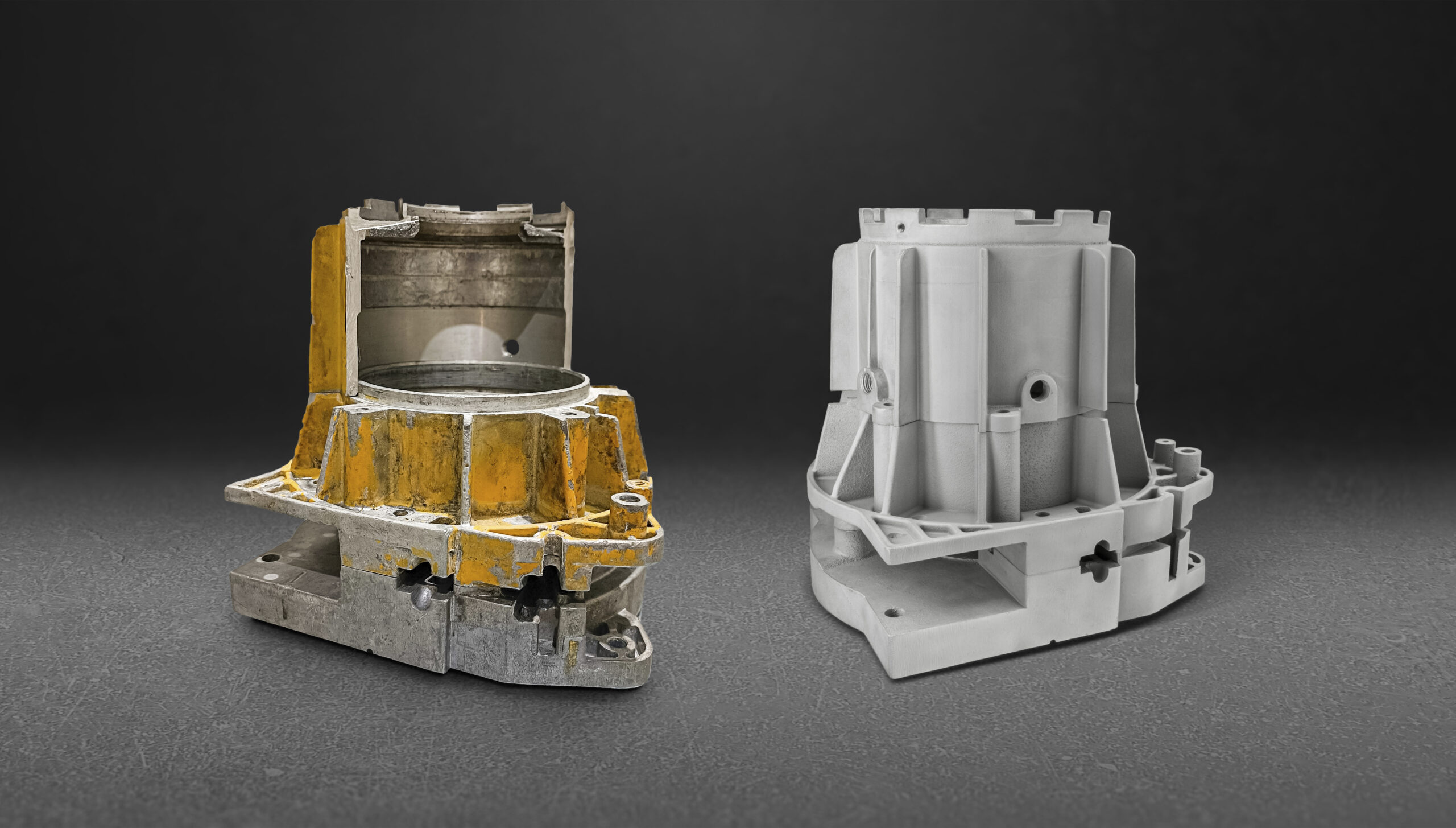
The customer’s old component serves as the starting point, but the result can be an entirely new, optimised solution. Spare parts can be manufactured on demand, without large inventories or production batches made far in advance. Particularly with older machinery and equipment, this can reduce downtime and spare parts inventory costs.
“There is a vast amount of industrial equipment whose spare parts availability still depends on old drawings, suppliers and inventories. When a digital model is created from a component, it effectively becomes a digital spare part that can be manufactured again whenever needed,” explains Juha Kotila, Sales Director at Delva.
Reverse Engineering as a Competitive Advantage
The digital spare part model can also remain available to the customer for future use. Once the component’s 3D model, material specifications and manufacturing parameters have been documented, the same part can be produced again later without needing the original physical component.
This also makes it possible to build a complete digital production chain, taking an old component and turning it into a new, more functional and, where needed, improved product.
Contact us, lets make a better spare part for you!