Heat resistant Inconel for demanding application

3D printed Inconel – optimised materials for tough industrial use

Would you benefit from oxidation- and corrosion-resistant material, which works in extreme environments, including elevated temperatures and being subjected to high mechanical loads? Have you thought about Inconel? We at Delva are very good at printing Inconel and finding the possibilities for exploiting this excellent material.


In many applications, corrosion resistance is of great importance. Stainless steel 316L is a familiar choice for many. It contains a minimum of 10.5% chromium, forming a self-repairing oxide layer on the product’s surface. The material is suitable for printing – and an excellent choice in many applications. But there are alternatives which are worthy of considering.

We at Delva want to emphasise that Inconel 718, Inconel 625 and HX, all nickel alloys, are relevant alternatives for stainless steel as certain central features achieved with Inconel are better than with 316L.

In the latter chapters, we will also discuss Inconel 939, the royal of the Inconel superalloys.

The Inconels are great examples of materials worth thinking outside the box.
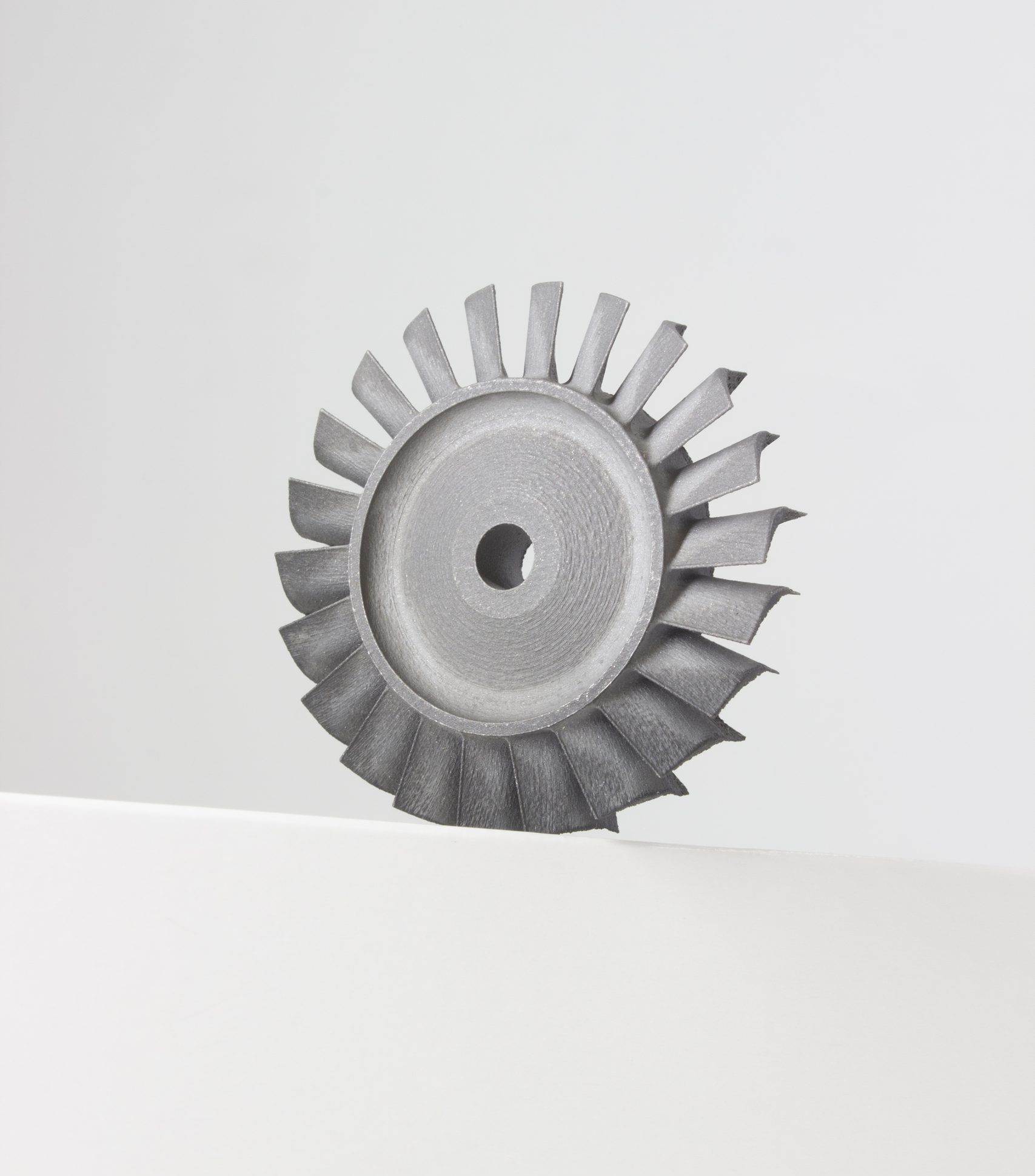
Inconels’ performance values

The yield strength of Inconel 718 is around 1200 MPa, Inconel 625 has a yield strength value of 650 MPa, while 316L has only 250 MP.

Pitting resistance equivalent numbers (PRE-numbers) are often used for stainless steels to determine resistance to pitting corrosion. The trait has its base on its chemical composition. Generally, the higher the number, the better an alloy’s corrosion resistance in chloride solutions.

The PRE-number for corrosion resistance is 52 for both Inconel 625 and HX, 29 for Inconel 718, and 26 for stainless 316L.

Cost-benefits using Inconel

The costs of using these Inconel superalloys are similar to stainless steel, even lower when exploiting the materials’ advantages. The better performance allows us to design lighter structures, which means less printed material and less cost.

The durability of Inconel is outstanding. That prolongs the lifetime, and that way lowers costs further.

Inconel and conventional manufacturing methods

The parts printed from Inconel 718 are nearly 100% dense and have the same material characteristics as conventionally manufactured Inconel parts.

Inconel is known for its somewhat challenging weldability. Delva has ongoing collaborative research to further research weldability, especially in dissimilar material pairs. Improved weldability enables joining superalloys with other, more conventional materials. For example, you can have a base structure using 316L, print the part with critical properties with Inconel, and join these two by welding.

Depending on the Inconel class, neither is the machining straightforward. Generally, the printing of Inconel reduces the need for machining as the pieces are often good enough as printed. But there are always certain areas like sealing surfaces and others that need to be machined. For that, knowledgeable machinists and available processes are essential assets.

Testing Inconel 718
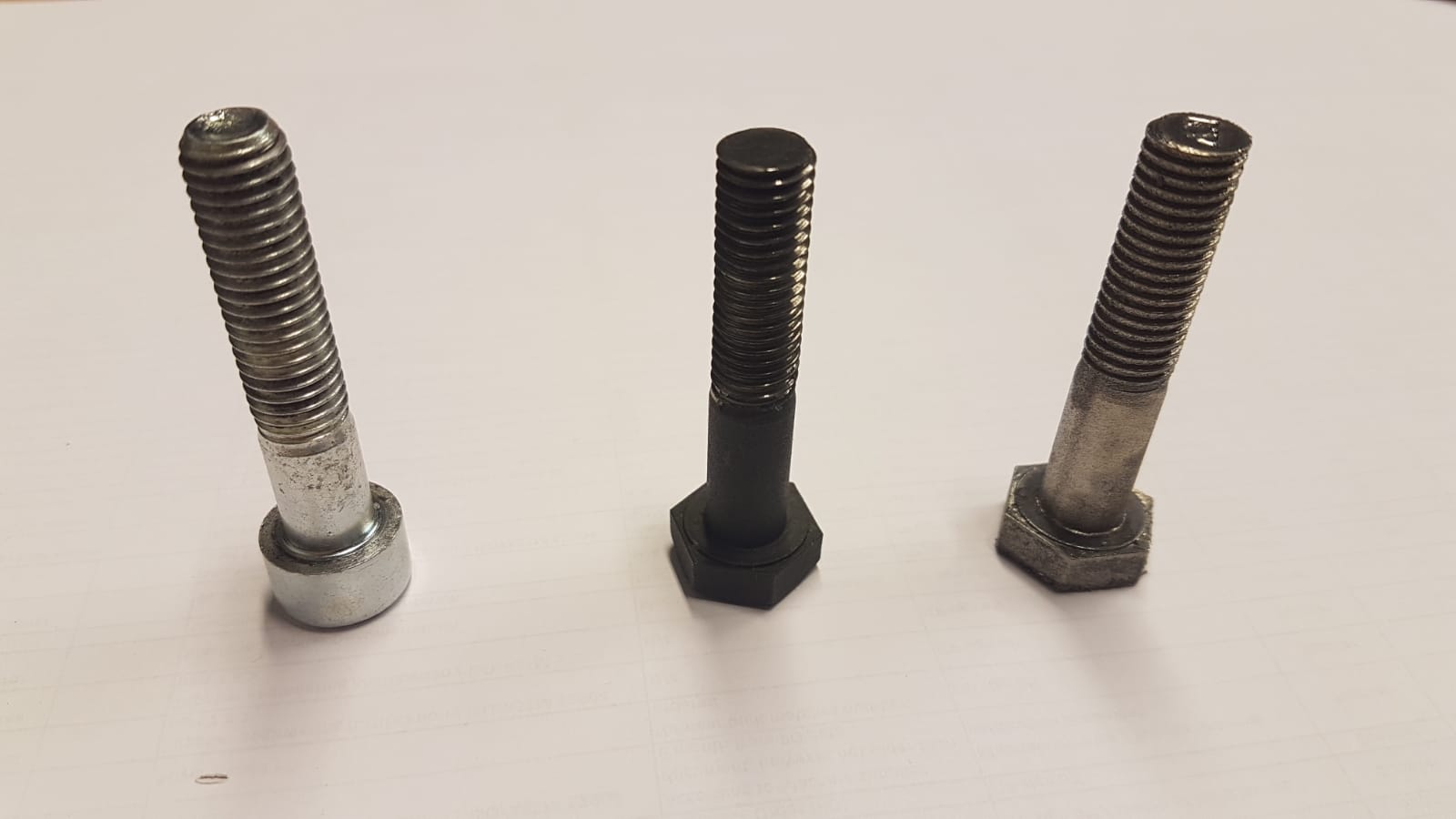
Delva has earlier printed threads from Inconel 718 for tensile testing, with outstanding results.

The quality of threads was excellent, and tensile testing showed: strong – stronger – 3D printed Inconel.

Fatigue strength is generally recognised as a critical property in industrial applications and needs to be studied carefully. On the other hand, heat treatment is a way to modify material properties like hardness. It is essential to be aware of how heat treatment affects on fatigue strength of the material, in this case, Inconel.

The tests showed the consistently high quality of the fabricated Inconel 718 material with a predictable response to cyclic stress at different amplitudes. The study’s results supported the effort to develop tailored material properties for industrial applications using modified heat treatments. Further extensive testing will take place, but initial results were already encouraging; according to the result curves, the material whose properties we altered by non-standard heat treatment meets the requirements in terms of dynamic load.

The royal of superalloys, IN939

Some time ago, EOS introduced a new nickel-based alloy, EOS NickelAlloy IN939, for additive manufacturing.

Thanks to its excellent oxidation resistance and outstanding mechanical properties at elevated temperatures, IN939 opens new possibilities for additive manufacturing in demanding applications. EOS NickelAlloy IN939 offers improved temperature capabilities and excellent mechanical properties up to 850 °C, which is 200 °C more than IN718.

IN939 is a crack-free, strain-age-resistant product. Having an optimised heat treatment without requiring HIP (Hot Isostatic Pressing) significantly reduces post-treatment costs and effort.

During the development of IN939 , EOS has worked in engineering and heat treatment, while Delva has advanced machining and welding process development with its specialist network.

Ready materials for demanding applications
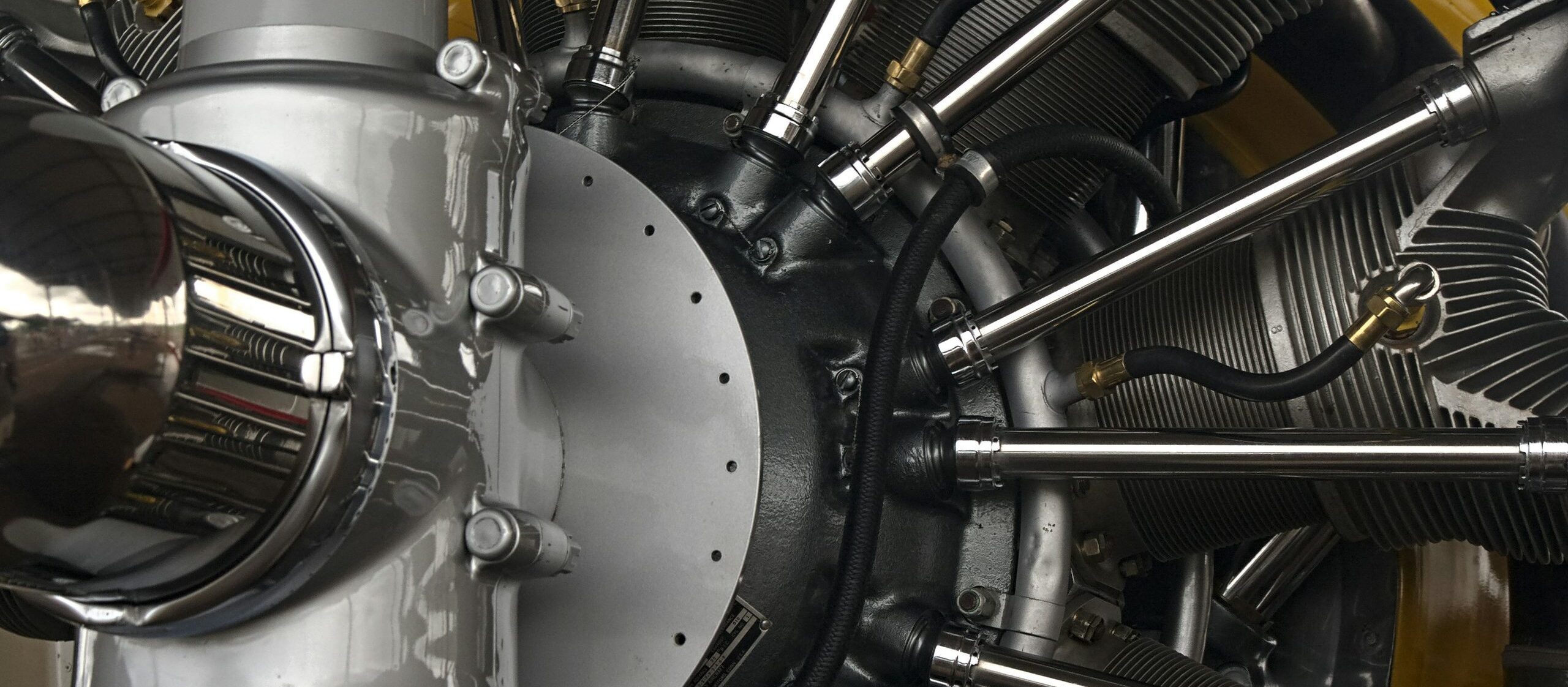
The printable Inconel materials available from us are

EOS NickelAlloy IN625
EOS NickelAlloy IN718
EOS NickelAlloy IN939

Together they are suitable for an extensive range of applications.

Thanks to IN939, potential applications include stationary gas turbine industries and applications like guide vanes and heat shields. Previously existing materials designed for additive manufacturing have not been suitable for such applications.

Following Delva’s philosophy, Delva serves customers in the way that best fits the customer’s needs. That includes even Inconel 939 parts being available as ready-machined parts from Delva.


For more information:

CTO Markku Lindqvist,
+356 50 522 5016
markku.lindqvist@delva.fi
info@delva.fi

3 ways to save money and the environment with 3D metal printing – your customers will also be interested

Environmental sustainability is becoming one of the most crucial success factors for companies. Your company is required to have environmentally friendly processes, products and services. A company minimising its carbon footprint is not only of interest to customers but also to investors and potential employees. A company determined to increase carbon handprint for its customers is building a significant and sustainable competitive edge. Additive manufacturing supports this effort in many ways. Next, we will explore the possibilities of 3D metal printing in particular.

Corporate responsibility and sustainability are integral to successful companies’ value base and strategy work. In addition to recognising the need for change, companies can see solving sustainability challenges as an opportunity for a profitable business. A genuine drive for sustainability requires all of us to be willing to change our traditional ways of thinking, learn, and continuously improve what we do. Printing as technology helps us to go further.

Sustainability encompasses not only the environment but also the economic and social aspects. We often consider the cultural dimension as well. In this paper, we focus on the environment and, through it, on the economic part. In our earlier article Sustainability benefits from 3D printing, you will also find insights on metal printing as a contributor to sustainable development.

Metal printing for sustainable, repairable and recyclable structures

The circular economy starts from the basic principle of designing out waste. Products are designed to be durable and repairable. The aim is that the material remains in use without losing its value for as long as possible. Once this process is complete, the material is recycled for other uses.

Metal printing supports these objectives in several ways. The structures use as little material as possible – just the amount needed. The manufacturing process minimises waste, and the raw material is directly recyclable within the process. In addition, the structures are incredibly durable, repairable by printing and, when made from a single material at the end of their life cycle, can be effectively recycled. Metal printing is a material and energy-saving production method, allowing solutions to be implemented with less, more wisely and more efficiently. All this reduces the carbon footprint.

Metal printing reduces the carbon footprint and increases the carbon handprint

A forward-looking company is not satisfied with reducing its carbon footprint but aims higher. When a company produces a carbon handprint for its customer, the customer can reduce its carbon footprint.

In metal 3D printing, even the production of a complex part does not increase costs. Solutions we produce by metal printing are lightweight, streamlined structures. In use, they significantly reduce energy consumption and take up less space. Printing sub-assemblies as a single component and, for example, optimised hydraulic components reduce the need for separate seals and eliminate leakage risks. Metal printing can take gas and fluid flow optimisation to a new level, thus improving efficiency. All these benefits can be multiplied by the customer’s overall solution.

Reducing a component’s weight often also reduces other structures, leading to savings in investment and operation. There are also many structures where combining traditional manufacturing and 3D printing offers significant cost benefits.

The freedom of form in customer components offered by metal printing opens up entirely new technical solutions and thus further increases the carbon handprint. Therefore, it is worth considering what new generation solutions your company can develop for an existing product or production lines using 3D printing. Equally, the structures made possible by printing can open up new applications with a carbon footprint, generating new, sustainable business.

Spare part printing reduces logistics costs and minimises the need for warehouse space

Metal printing replaces multiple part assemblies by printing a single, uniform component. Such a component provides a technological advantage and IPR protection, reduces logistics, and saves time and money in the supply chain. Manufacturing near the usage reduces the need for transport and thus the ecological load even further. Reducing order lines brings efficiency to operations and improves the company’s competitiveness.

With metal printing, we can produce a wide range of spare parts for you, extending the life of your machinery. Your spare parts warehouse may be digital, and 3D printing allows you to get parts from there quickly, reducing physical storage space and potential wastage. If no model exists, we will scan and model your components, digitally make the broken one intact and print the file as a spare part. Ideally, the replacement part is much better than before and adds durability to your existing solution.

Let’s print results
It is fair to say that metal printing brings sustainability to the manufacturing industry. This statement is true for companies producing machinery and equipment, process industries, and general maintenance and repair operations.
As highlighted above, sustainability is strongly linked to business performance: sustainable solutions deliver results. With the above arguments, we want to stimulate thought and debate in your company. We would be happy to discuss how your organisation could contribute to positive development with you.

Contact us and experience how metal 3D printing can take your competitiveness to the next level.

Integrating metal 3D printing into every company`s range of manufacturing methods – Delva offers a partnership that adapts to customer needs

“The heavy industry process was made more efficient while the need for spare parts and maintenance was reduced with a more durable component printed from Inconel.“

“A company that develops suspension systems for vehicles took the lead by lightening its solution with a topology-optimised metal print.“

“The machine builder’s product development takes advantage of prototypes’ 3D print-enabled mass production. The approach shortens the testing phase and saves costs.“

“The manufacturing company gained more years of operation for its ageing equipment and reduced production downtime by printing a spare part.“

The above examples are just the tip of the iceberg. Metal printing is an enabler in many situations. Integrating metal printing into every company’s range of manufacturing methods makes sense. Delva is your flexible partner in the use of metal printing.


The use of metal printing in the industry is growing rapidly, but companies have publicly opened up very little about their development projects. After all, this is easy to understand as the goals are often strategic, and successes provide a sustainable competitive advantage. The actors who have presented their encouraging experiences deserve a big thank you, as they are leading the Finnish industry by leaps and bounds by example.


Either-or or both-and?

Will the lights soon go out in the foundries and the work in the machine shops stop when orders are transferred to the printing service bureaus’ 24/7 unmanned machine shops? Will customers soon be printing the equipment and spare parts they need themselves? Will steel mills switch their continuous casting processes to atomisation and the supply of steel bars to powder bins? These utopias – or perhaps, for some of us, dystopias – are unlikely to come true in our lifetime. But change is happening. Instead of either-or, it is both-and, according to Delva.

At Delva, we believe that the best way is to integrate metal printing into the range of utilised manufacturing methods. Then its potential is recognised in all aspects of a company’s operations: in the development of production processes, in maintenance opportunities, in taking machinery and equipment to a new level, and in the possibility of creating entirely new business.

However, printing does not replace more conventional manufacturing methods but complements them. Printing removes manufacturing limitations and opens up new design possibilities with purpose and purpose only in mind. It makes it profitable to use new, previously expensive or otherwise tricky materials to exploit. It helps create something unique with less and more wisely and therefore sustainably. However, metal printing may need, for example, machining of the sealing surface or other features produced by a more conventional manufacturing process. At the same time, many components are not economically viable or cannot be printed due to manufacturing constraints such as size. Therefore, it is a skill and a prerequisite for success to exploit the full range of expanded manufacturing possibilities.


The right choice of materials multiplies the benefits

Mechanical engineering has become accustomed to using particular materials because they are perceived to offer adequate performance and cost-effectiveness for their applications. Changing the material can seem like a chore. However, sticking with the same old materials for printing also leads to compromises that do not achieve the best possible benefits. It should also be noted that not all familiar materials are even available in the printing material range, as it does not make sense to print them. Therefore, new materials need to be explored; they will bring results.

An excellent example of the possibilities opened up by metal printing is Inconel. It is a corrosion-resistant nickel alloy that is very strong even under extreme conditions. Inconel is available in different alloys, such as Inconel 718 (IN718), Inconel 625 (IN625) and Inconel 939 (IN939). Each of these has its characteristics and applications. They have in common that they are heat resistant and therefore suitable for demanding applications. Although Inconel has many advantages over stainless steel in terms of performance, its use has so far been limited. This is mainly due to its challenging machinability due to hardening. Printing has the potential to change this situation.


recycling_of_metal_powder_is_part_of_the_3dprinting_process

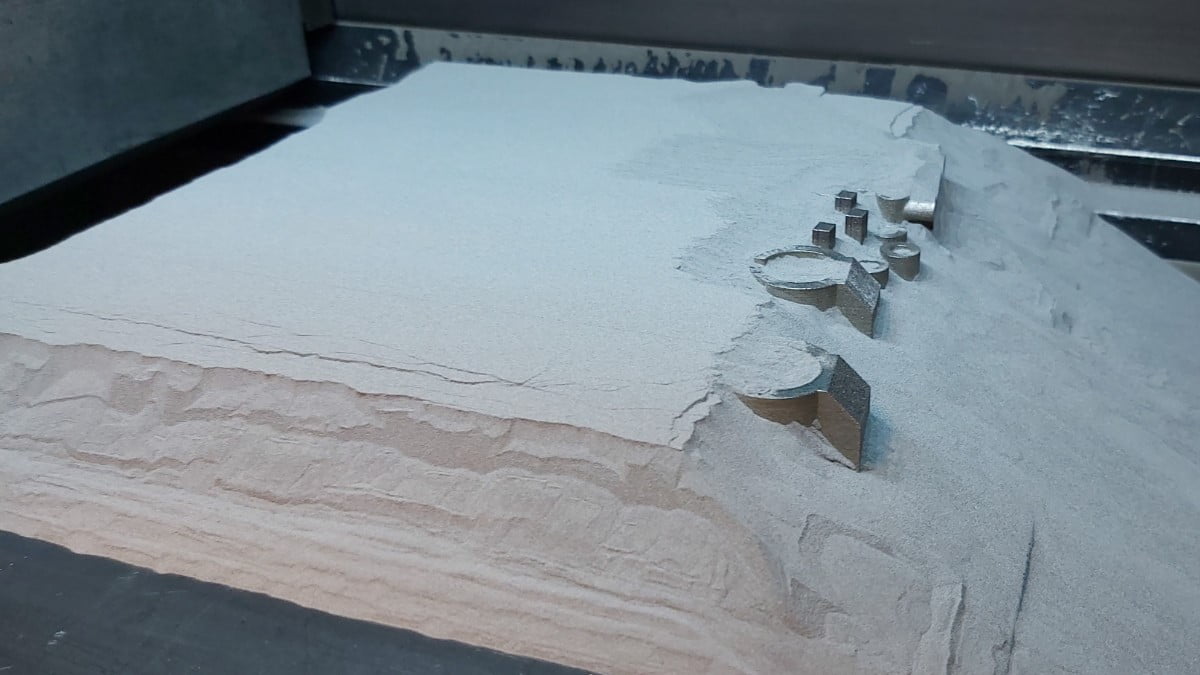
Photo: Laser Powder Bed Fusion (L-PBF) is the most advanced metal printing technology and produces components for the most demanding industrial applications.


The dimensions of knowledge in metal printing

Metal printing is an opportunity that permeates the entire company. Developing a broad range of skills is essential to take advantage of the opportunities. It is crucial to identify how different functions could benefit from metal printing. Productivity, competitiveness, and sustainability are jointly underlined by the industry and where printing opens new possibilities.

It is good to identify the different areas of competence and consider how to achieve an adequate level in each aspect. A key area of competence relates to knowledge of one’s industry, solutions and visions for the industry, processes, and basic rules in production. These are the core competencies of each company.

Specific skills are needed in designing printed components to exploit the rules of printing and optimise the parts while taking account of the constraints. Printing itself and materials are strongly interlinked areas of expertise, requiring both skill and experience. Each material has its characteristics, which must be considered to achieve a successful result. In addition to all this, a deep knowledge of simulation, optimisation, calculation, post-processing, etc., is required. Each company chooses its 3D printing path and sets its targets.


Getting the most out of digital manufacturing

Most companies have set targets for this trajectory: Digitisation, digitalisation, and digital transformation. The opportunity to increase productivity is obvious but requires significant investment.

3D printing is inherently digital manufacturing and always requires 3D models of the parts to be produced. Software development around printing has been massive in recent years. Tools are available for design support, efficient production planning, control, and continuous production monitoring.

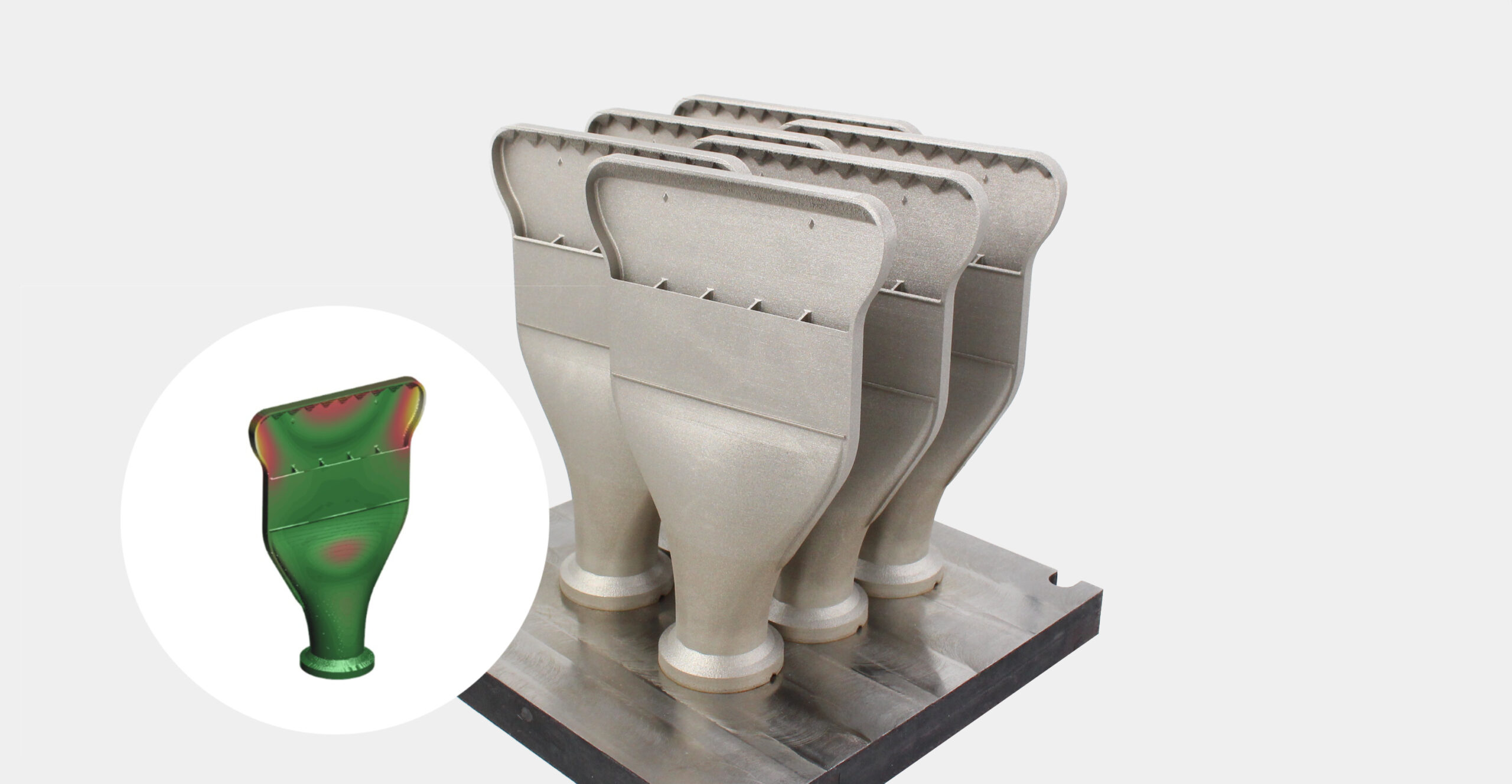
Print simulation is a significant aid for challenging structures, which helps anticipate and compensate for heat-induced deformations in the manufacturing process. The printed part conforms to the design. Delva uses simulation to help companies achieve a successful outcome more straightforwardly.

Photo: In challenging structures, print simulation helps anticipate and compensate for heat-induced deformations in the manufacturing process.


Partner the way you want

Successful companies look for ways to succeed, and at Delva, we remind you that you don’t have to know or have time to do everything yourself. The same applies to the investments in printers and equipment significant in metal printing. The pace of development in metal printing is fast, and even keeping up with the latest developments requires resources. You can also benefit from this development with smaller and more predictable investments. This is where the use of existing know-how is often a good solution.

At Delva, we offer a partnership that adapts to our customers’ needs. Needs can be far-reaching development partnerships, new creation and knowledge building, pure 3D printing capacity, or combination. The client decides the level of collaboration. For us, metal printing in Delva is a source of inspiration and a sea of opportunities. We learn and teach. We develop and print. We offer the broadest range of materials in metal printing in Finland, from Inconel to titanium and from tool steel to copper. We do it all with a pro-industry attitude and know-how. So come and challenge us. We print any part*) *) within reason, of course.

The article was at the first time published in Eurometalli 02 2022.

On the dimensions of know-how and cooperation

In addition to reliable equipment and standardised processes, metal 3D printer manufacturers offer tested materials and parameters. These together make printing relatively straightforward and the printed components consistent and reliable. The basic processes defined by the printer manufacturers are based on the printing of test cubes and work well when printed designs follow the basic rules of additive manufacturing. It is essential to recognise that the desired results may not be as straightforward when printing advanced structures. However, the experts will succeed. In metal 3D printing, there are several identifiable areas of expertise, and we will discuss theses from the perspective of the powder bed fusion (PBF) technology*) in the following.

The design determines the game

Metal 3D printing is an enabler. A lot of design decisions have traditionally had to be made based on manufacturability. Metal printing changes the operational goals and needs to the new starting point.

An ever-increasing number of industrial machine and equipment manufacturers and process industry companies in various industries are aware of the possibilities offered by metal printing and invest in their additive manufacturing design expertise (DfAM, Design for AM). Design engineering agencies that offer DfAM expertise support this progress. From the perspective of utilising metal printing, investments in advancing DfAM design expertise are of significant importance, as the design is the gamechanger. Combining your industry expertise and the principles of design for metal printing creates genuine innovations. However, a well designed is only half done.

We must be able to break the limits

The crux of metal printing is the heat, and it is necessary to control the melting process. If the heat cannot exit the piece during printing in the powder bed fusion process, the piece may overheat and start to warp up from the powder bed, causing problems. In addition, when the printing process, which has continued in some cases for several days, is interrupted toward the end, this will cause significant delay and costs.

It is not always possible to follow the basic rules of design for metal printing and thus avoid problems; further developing existing solutions and printing spare parts often call for a breach of basic design guidelines. A good example is low-angle printing, which disrupts the established 45-degree rule of thumb. Challenges have also been encountered when printing various lattice structures. These are useful structures that can simultaneously both stiffen and lighten printed solutions.

These structures are, therefore, a matter of both technical and economic significance. We must be able to break the limits, and this we do by adjusting the process. There are many variables in the printing process. Leaving it to chance and good luck is not enough. The team conducting the printing must have a profound understanding of the printing process and a determined experimental approach.

Expect profound 3D printing expertise

In printing, each material behaves in its specific way. Therefore, by definition, should industrial-grade prints require impeccable performance. Nominal densities and strength values must be maintained, and process-related adjustments must not impair the other properties of the part. However, it is essential to look at the whole and be able to look outside of the standards when the structures to be printed require it. Even challenging printing runs can be done successfully with minor changes made to the printing parameters.

The printing expert must know very well what they are doing as the parameter changes can affect the material’s performance. The person must foresee the parameter changes and sufficiently be aware of the printed component’s requirements and consider the component’s critical and non-critical points and properties. This accentuates the importance of close collaboration between the designer and the printing expert – and the deep expertise of both.

The importance of thermal management is growing with the increase of multi-laser printers. There is a prevailing trend of glorifying high-power printers with multiple lasers. This trend is understandable since the factor affecting the price of a printed component is, to a large extent, the time spent printing. However, success at high efficiencies requires even more expertise and development work, and the full utilisation of powers and speeds, especially with thermally challenging materials, may not be achieved. Therefore, to succeed with high efficiencies requires higher expertise and development work, and the full utilisation of power and speed, especially with thermally challenging materials, may still not be achieved.

With software development has simulation advanced and progressed into a supporting means for printing. As a result, there are both software and services offered on the market. The simulation can be used to predict the thermal loads during the printing process and the deformations caused by the heat. It is also possible to predict the risk areas of overheating that may affect the material’s structure. The information helps to modify the design of the item for better printing, compensate for possible deformations to achieve sufficient dimensional accuracy, and keep the material properties uniform throughout the component by controlling heat.

Competence will increase in the network

There were three areas of expertise identified here above: substance expertise in one’s own industry, understanding of design for AM, and profound expertise in metal printing itself. A company can surely do everything internally, thus growing competence takes time and requires significant investments. However, with the help of close networks of experts and partnerships, it will be possible to bring together wide-ranging and at the same time profound, comprehensive expertise. All of this may not be achieved by one actor on its own, especially at a time when development is extremely rapid. Therefore, networking is beneficial, without question even necessary, within each area of expertise mentioned above. As an example of this, the seamless cooperation between the printing bureau, the equipment manufacturer, the material supplier, and the machining expert. In addition, the collaboration between research and educational institutions benefits all the areas of expertise. Thus, within the framework of FAME, we all have an excellent opportunity to promote purposeful development and further increase our expertise, together and separately.

The authors underline the strong power of collaboration – also in blog writing.

Kind regards,

Markku Lindqvist, CTO Delva Oy


*) Powder Bed Fusion technology is a mature metal printing technology that excellently meets the needs of the industry. When printing is a thin layer, a few tens of microns thick, even finer than wheat flour, applied to a printing plate. Hereafter the laser, or lasers, melts the layer in the desired cross-section of the pieces growing on the printing plate. In addition to melting the layer of metal powder, the laser also melts several of the previous layers, resulting in a completely compact structure. After each layer is a new layer of metal powder applied, followed by a new melt.

Delva Oy is an experienced partner in industrial metal additive manufacturing. Delva offers co-development that dives beneath the surface to find optimal solutions to the customer’s individual needs. Metal 3D printing, also known as metal additive manufacturing, adds a new dimension to the manufacturing technologies and enables entirely new structures and solutions.


This article was originally published in Finnish on the FAME (Finnish Additive Manufacturing Ecosystem) website on November 8, 2021.

3D printed nozzle

Additively Manufactured nozzles demonstrate the benefits of Industrial metal printing

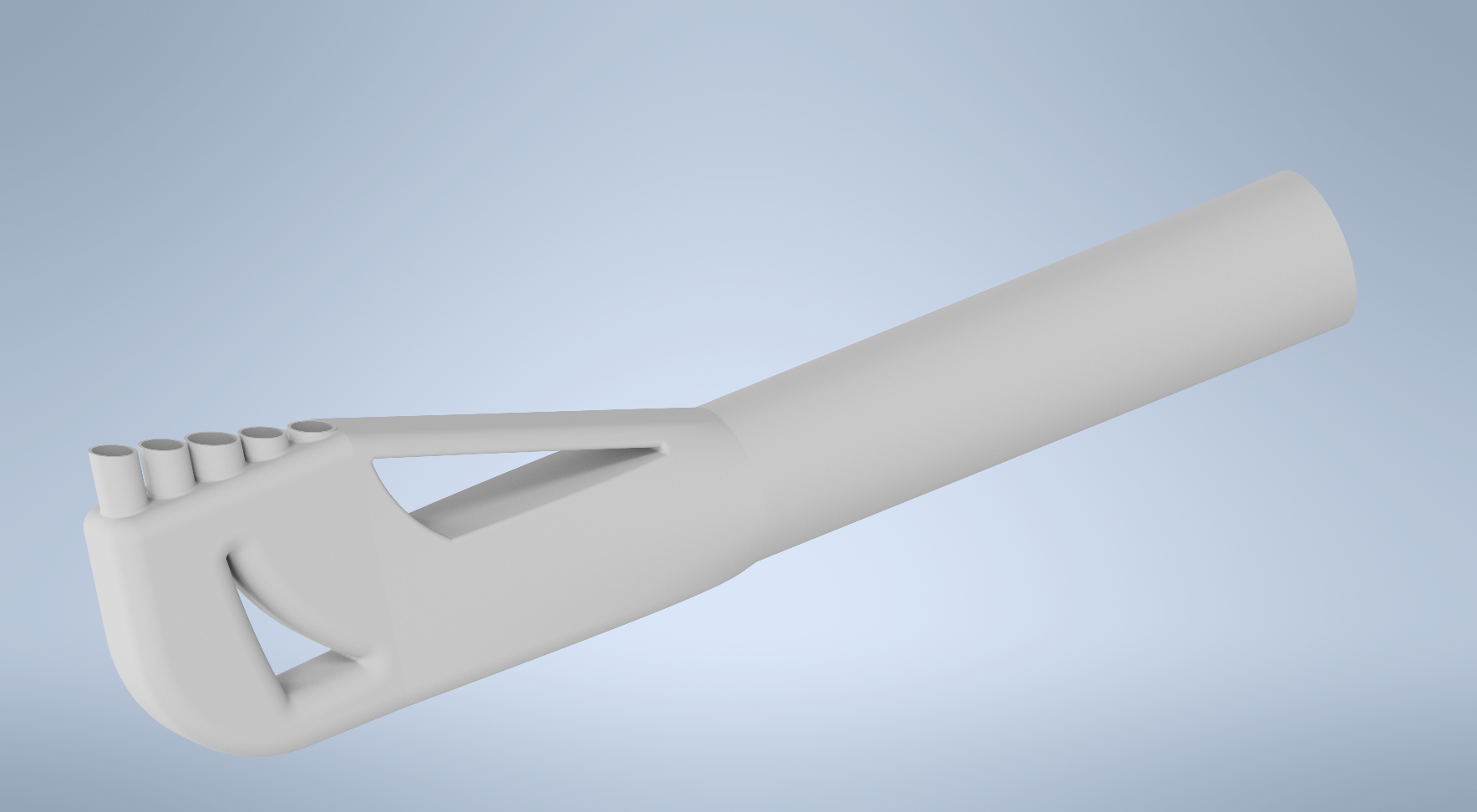
The freedom of shape provided by Additive Manufacturing makes it possible to improve the efficiency of nozzle structures. There is no need to design the nozzle from the manufacturing point of view anymore. AM enables maximum freedom of design and the nozzle can be designed with the best flow characteristics in mind.

For example, can the channel structure be manufactured with AM to allow the part to be more efficiently cooled from the inside. The materials passed through the nozzle can be designed to mix more efficiently and the mixture can also be directed in a precise direction. You can also lighten the weight of the parts significantly with the right material choices and optimized structures will minimize the space needed.

3D printed nozzle, rendered image ©Delva.

Metal printing offers a new approach

Printing significantly reduces the need for assembly when you manufacture only one component instead of machining dozens and assemble multiple parts together. This saves time, money, and working hours as well as the need for logistics in the supply chain.

A wide range of materials allows for a variety of applications. For example, nickel alloys are suitable for conditions hotter or more corrosive than many other materials and thus reduce the need for cooling.

With the freedom of shape, a wide range of functionality can be agilely designed for printable nozzle pieces. This does not test 3D printing of metals as a manufacturing technology, but our ability to create new solutions. Your R&D can genuinely benefit from the possibility of producing a printing plate full of parts, each of them slightly differing from another. Running tests with these extensive series of variants allows a company to come up with the most optimal solution in an agile way, cost-efficiently with long-term benefits.

3D-printing widely used in industrial applications

Delva’s customers have successfully been able to vastly increase efficiency and durability of the nozzles designed for and manufactured with industrial metal AM.

Some food for thought with these rendered images that demonstrates possibilities enabled by AM.

Contact us for more information!

Metal 3d printed low angles

Together we exceed any limitations of 3D printing

The moral of this story: exceeding restrictions together takes us further. So, what comes to AM, you have no reason to “carry coals to Newcastle” – or, as we would say in Finnish:” it does not pay off to go further than the sea to fish.”

The use of additive manufacturing (AM) in the spare part business is snowballing in many sectors. AM enables the life cycle extension of the machines and equipment by providing spare parts fast, decentralising manufacturing, and reducing inventory. Moreover, it is applicable even for single components and saves time and money while it requires no molds or other costly preparations.

Metal printing calls for design rules

In metal 3D printing, it has been essential to follow specific design rules. One rule of thumb has been to build angles lower than 45 degrees only with support structures. The support structures conduct away the heat generated by the process and prevent distortions in parts. It is worth noting that the support structure increases the use of printed material and thereby increases costs. The support structures also need to be removed, which can be costly or sometimes even impossible.

Reality does not follow rules

Huld’s AM team faced this limitation with a customer spare part having thin blades with low build angles. These blades were 2 mm thick with build angles as low as 13°. The low angles were not the only challenge, as the component geometry also dictated that these angles were present in multiple directions. Therefore the part could not be optimally oriented on the build plate to reduce crash risk during the build. Like in most cases, with spare parts, changing the design was not an option. Huld found a solution to fulfill the customer’s requirements. This case also initiated a development project with Delva – to print low-angle parts without the support structure. Delva had overcome this challenge in many customer cases, both in spares and in new components, but an angle this low required special forces. Therefore, Delva started a target-oriented dialog with EOS.

Customer requirements guide the way

Huld, Delva, and EOS are all genuinely customer-oriented companies. The technology is not there solely for the technology, but to fulfill the customer’s needs. The companies efforts to encourage sustainability and responsible manufacturing underline this. A development project was initiated at EOS to find the proper process parameters to build low angles in different directions successfully. The theory and practical knowledge provided a good foundation and determination concretised in tireless testing. As a result, EOS solved the issues with the low angle by optimising process parameters and implementing innovative exposure strategies.

Together, EOS, Huld, and Delva make these structures – and much more – also available locally in Finland.

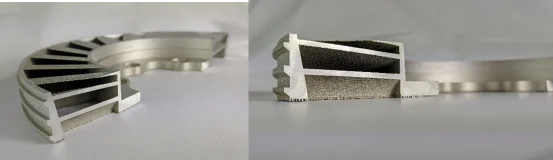
Picture: Successful low-angle (as low as 13°) builds, built without a support structure. Manufactured with EOS standard HSS recoater. Part ø 240 mm.

Huld offers an internationally unique combination of software and product development expertise, building intelligent solutions that last for tomorrow – and beyond. In addition, Huld has years of experience working on additive manufacturing with industrial partners. Huld is eager to solve complex projects and push the additive manufacturing industry forward with seamless cooperation.

Delva Oy is an experienced expert and partner in industrial metal printing. In addition to the printing service, Delva offers co-development that digs more profound than the surface to find optimal solutions to the customer’s individual needs. Metal 3D printing adds a new dimension to the range of manufacturing technologies and enables entirely new structures and solutions. Metal AM, also known as metal 3D printing, adds a new dimension to the range of manufacturing technologies and enables completely new structures and solutions. Embrace this mature technology with Delva and improve the competitiveness of your company. Metal prints from Delva Oy for tough use.

EOS is the leading technology provider worldwide for industrial 3D printing of metals and plastics. EOS is with the innovative EOS system, a technology and quality leader for high-end solutions in additive manufacturing (AM). Founded in 1989, it is the pioneer in direct metal laser solidification (DMLS) and provides highly productive systems for additive manufacturing with plastics. The portfolio also includes worldwide service and comprehensive consulting offers.

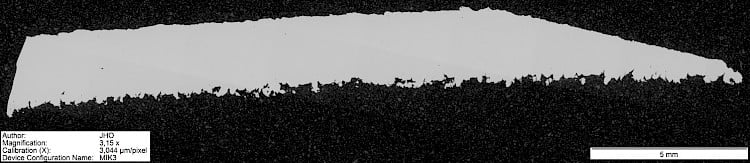
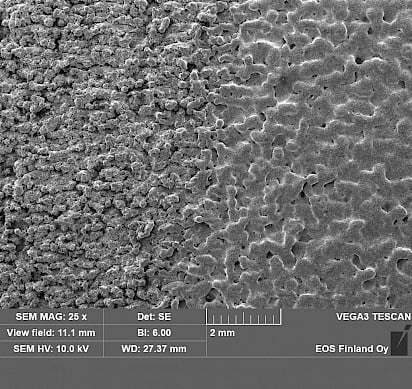
Photo: Cross-section of the blade. As can be seen, the structure is fully dense throughout the blade itself. Characteristic to the technology, the down skin roughness is relatively high in the as-built state, especially with extremely low angles.

Photo: As-built (left) and shot-peened (right) down skin surface of the blades. As can be seen, shot peening reduces the roughness significantly.

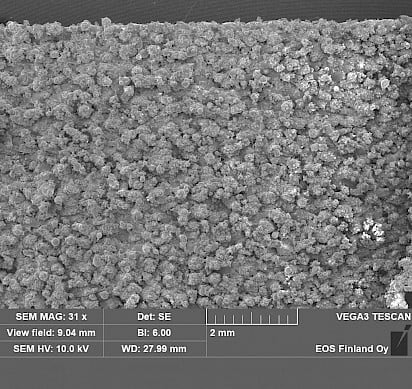
Photo: As-buit down skin (31x magnification)

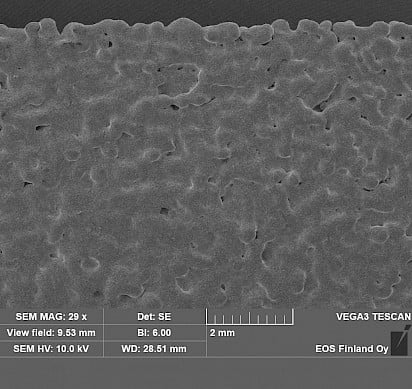
Photo: Shot-peened down skin (29x magnification).

Vibratory polishing or other similar abrasive methods can further reduce surface roughness.

All images in this article ©EOS.

Heat treatment of 3D printed metal components has a big impact

3D printed metal components are almost always heat treated. The treatments remove the internal stresses created in part during printing and change the part’s microstructure as needed. Commonly in industrial use, the microstructure’s modification targets specific properties like hardness, strength, toughness, and wear resistance.

Opportunities to improve

Stress relief annealing is suitable and done for all parts. The pieces go into the oven mainly before sawing. In this case, they are still attached to the printing plate. Improved properties are sought by altering the microstructure by, among other things, solution and aging. Both treatments improve the strength of the part. The solution treatment homogenizes the material and improves its phase structure. In addition to strength, as a function of the temperature and time typical of each material, aging increases the hardness until the overaging starts. Then the properties of the part start to change in a softer direction.

3D printed components’ heat treatment aims for the same properties and values​ specified in the standards for traditionally manufactured metal products. The properties are achieved by the heat treatment cycles. The definition of processes is similarly based on existing, traditionally manufactured part standards.

At Delva, we see that heat treatment standard like AMS 5662 work for 3D printed components, but could be significantly optimized. Namely, the treatments specified for traditional materials and material strengths can be very long in duration. 3D printing is a different kind of manufacturing process, and the metal used already differs from the conventional structure. Besides, the material thicknesses used are typically much lighter in 3D printed components than traditional.

EOS IN939

In 2020, EOS launched the EOS IN939 material. This extreme temperature heat-resistant nickel alloy traditionally acquires its good material properties in a 50-hour heat treatment cycle, as determined with the standard. Thanks to EOS’s optimization work, the 14-hour heat treatment of the parts – less than a third of the standard processing – achieves even better material properties. This development work directly leads to cost and time savings, and as said a better product.

Development requires a lot of resources

The development of heat treatment is essential. In the example of IN939, changing the heat treatment from the standard to the shortened process time and achieved better properties for the parts. There are other similar examples. Development work requires dedication and significant resources. It is essential to realize that risks exist and that properties can also significantly deteriorate from the intended ones due to erroneous heat treatment decisions. In addition to cooperation, patience is, therefore, an asset.

At Delva, we experiment, discuss, and develop with our network of expertise. Our goal is further to increase the benefits of 3D printing for our customers. Delva is delighted with the development work done by EOS Finland in Turku and the support received by users of Eos metal printers. We can see EOS’s tireless work to optimize heat treatments reflecting in Delva’s everyday life as the best possible instructions and as optimized properties and processes in our customers’ components.

Manufacturing process based on target setting

We repeatedly communicate the importance of thoughtful material choice. In our view, the 3D printing materials should be selected on the basis of the function and purpose of the component. Thus, the materials may differ from those used in conventional manufacturing. Also, the heat treatments they require can be unusual and turn out to be quite expensive to commission. Delva strives to use mainly its own furnace for heat treatment, as it is familiar and cost-effective in use. In addition, significant flexibility is gained in the work phase. Doing it yourself develops skills, clarifies responsibilities for part properties, and, as mentioned above, saves a lot of time and often money.

It is worthwhile to invest in a more efficient heat treatment of your 3D printed components. Who wouldn’t want to produce better products faster and more cost-effectively? The customer need is guiding for us, also in heat treatment. Contact us, and we will discuss solutions according to your needs.

Nickel based superalloy Inconel 939 components for demanding applications from Delva

EOS Finland Oy and Delva Oy work together to boost AM part production using the nickel-based superalloy IN939 in Finland.

EOS recently introduced a new nickel-based alloy, EOS NickelAlloy IN939, for additive manufacturing. Thanks to its excellent oxidation resistance and outstanding mechanical properties at elevated temperatures, IN939 opens up new possibilities for additive manufacturing in demanding applications. Potential applications for this material include stationary gas turbine industries and applications like guide vanes, heat shields, among others. Previously existing materials designed for additive manufacturing have not been suitable for such applications.

EOS NickelAlloy IN718, EOS NickelAlloy IN625, and EOS NickelAlloy HX are already suitable for a wide variety of applications. However, EOS NickelAlloy IN939 offers improved temperature capabilities and excellent mechanical properties up to 850 °C, which is 200 °C more than with IN718. Developing a hard-to-weld material was a very challenging project. EOS is very proud to introduce IN939 as a crack-free, strain-age resistant product, as well as an optimized heat-treatment that drastically reduces post-treatment costs and effort without requiring HIP (Hot Isostatic Pressing).

From powder to ready components

Delva offers metal printing for demanding applications and is delighted about EOS’ newest material. Delva has worked with EOS in the areas of engineering, heat treatment, machining, and welding during the development of IN939. With this first-hand experience, Delva is ready to produce parts at the printing facilities in Hämeenlinna.

Jarmo Kastell, CEO at Delva Oy, says that the target is to ensure high-quality components with outstanding properties and ease experimentation and utilisation of this material in the industry, potentially benefiting significantly from this new material. “Machine and equipment manufacturing industry has a lot to gain with this material in the global competition. And we are more than happy to be part of this development,” says Jarmo Kastell.

For more information, contact jarmo.kastell@delva.fi.

Sustainability benefits from 3D printing

Corporate responsibility and sustainable development receive a lot of attention. The genuine pursuit of sustainability calls for the ability to change our traditional thinking, learn, and continuously improve our actions. 3D printing as technology takes us significant steps further. We should see solving the challenges of sustainable development as an opportunity for a profitable business.

Additional manufacturing, familiarly 3D printing, supports these efforts in many ways. In the following, we open up the possibilities from the metal printing point of view.

Sustainability and business success go hand in hand

Optimally designed structures and carefully selected materials reduce the use of materials and improve durability. Replacing multi-part assemblies with individual printed components brings a technical lead, helps protect product rights, brings savings throughout the manufacturing process, and improves recyclability.

The lightweight and reduced space required for printed components help to build entire machines and equipment in lighter and smaller size. The savings in materials, weight, and costs are then multiple and also profits your customer.

Optimized printed metal components are high-performance in use. The benefits come from many different factors. In addition to weight and space savings, printed parts, e.g., improve efficiency by enhancing gas mixing in combustion processes. Unprecedented channel structures significantly reduce process time through enhanced cooling. Streamlined channels in hydraulic components increase energy efficiency and reduce leakage risks.

Printed spare parts, replacement of parts, and repair by printing extend the life of the equipment and make reuse possible. Combining scanning, modeling, and additive manufacturing opens up new possibilities for maintenance.

Could the new structures make possible by additive manufacturing help finding innovative solutions for your company’s business, which will not only reduce the burden but also improve the state of the environment – that is, the path to real sustainability?

Printing is sustainable

Digital manufacturing is a significant national endeavor in Finland. We increase efficiency, automate, seek environmental friendliness, and competitiveness in production. Printing is an essential part of the whole of sustainable manufacturing.

Powder bed technology based on melting metal powder uses precision-targeted lasers for melting, and the energy consumption of printing is reasonable. Recycling of materials is an integral part of the manufacturing process: unmelted powder is filtered locally and reused. However, energy consumption in the manufacture of printing powders and the large-scale utilization of recycled metals in the production of powders still have research and development potential.

The prints are very accurate in dimensions. Additive manufacturing thus creates nearly complete structures. Minimal finishing machining reduces material consumption, printing time, and machine time required for finishing. Reducing work steps saves time and money. The need for logistics decreases as the manufacturing steps are less and the production is closer to the use of the part. All this lowers costs, environmental impact, and the piece is quickly ready for use. We can also see local manufacturing as increasing the security of supply and transparency in the manufacturing chain.

In hybrid printing, complex structures are built on top of a machined base. The cost advantage is most often undisputed. This combination is an excellent example of the idea that printing and traditional manufacturing methods are not competitors, but complement each other.

3D-metallitulostus ja teollisuudelle

Recycling is part of the 3D printing process.

Sustainable success by printing

We know 3D printing as a manufacturing technology for several decades. Through the general development of technology, the opportunities to take advantage of 3D printing have multiplied. This improvement is likely to increase the attractiveness of the mechanical engineering industry as a career option. Development and new opportunities increase motivation; the chance to change the world for the better gives meaning.

All the means mentioned above improve sustainability and efficiency and help to increase the competitiveness of the Finnish industry. Competitiveness not only preserves but even increases work in the country. Utilizing innovative 3D printing helps create new options to solve substantial global challenges and create new thriving businesses.

Contact us to discuss more!

3D Printed spare part on the left will replace the by hand measured old parts

Reduce spare part concerns and storage by 3D-printing

Supply chains and security of supply have been a hot topic this spring. Availability problems have highlighted the risks posed by long supply chains.

Shortages have appeared in both standard and special parts. When the production process stops due to a lack of spare parts, the losses can be outstanding. Still, it is worth considering whether spare parts inventories will be significantly increased in the future to avoid problems. Inventories increase committed space, capital, and potential waste. Alternatively, a wider range of means can be considered. Of course, the challenge is not limited to end-users of machinery and equipment, but also manufacturers, who are bound by the readiness to supply spare parts for a long time. The manufacture of individual spare parts is also known to be expensive due to, for example, model and tool costs.

There is a growing interest in digital spare parts. They are spare parts for which related information is transferred and stored digitally. They are made, for example, by 3D printing, typically close to the user. In addition to the challenges outlined above, local manufacturing will also eliminate transport needs. A study carried out by VTT, Aalto, and several partner companies in 2016-2017 found that at least about 5% of companies’ spare part needs are suitable as digital spare parts.

In addition to the digitally stored spare parts described above, an interesting opportunity is to improve the availability of slow-moving spare parts for old equipment and machines by 3D printing. Printing speeds up, print sizes increase, and costs don’t usually become a barrier when looking at the whole. The slowdown in these cases is that 3D models are typically missing and must first be created to allow printing. 3D scanning and printing together can solve major spare parts challenges. 

3D scanning is not always necessary. In our photo example, the part to be replaced was measured at our office by hand. The modeled parts were assembled on a computer screen. The observed inaccuracies could be corrected and the 3D models were ready to print. Printing proved to be the most cost-effective way to solve the need for spare parts in terms of time and cost.

Contact info@delva.fi or via the contact form on our website.

Hybrid printing is a cost-effective way to improve production efficiency

By printing on a machined basic body, impressive and highly cost-effective hybrid components are created. We have successfully repaired new geometries for worn or broken components. Similarly, in the new parts, we have combined the strengths of traditional manufacturing methods and additive manufacturing.

The structures made possible by 3D printing of metals take us to a new level. A good example is the cooling channels of injection molds, which can be used to optimize the production of plastic parts and bring significant production efficiencies through shorter cycle times and improved yield. The quality of the injection-molded products can also be improved: the even cooling achieved by the cooling channel systems reduces distortions and thus improves the quality of the products and minimizes waste.

Molds wear out in use. Hybrid printing is a fast and cost-effective way to turn an old mold into a new one. In practice, the worn part is cut off so that the upper surface remains flat. The removed part is then replaced by 3D printing. When remodeling older molds, optimization of channels may be considered with the aim of streamlining the process as described above.

3D printing is digital manufacturing at its best. The design and manufacturing tools enable very different simulations along the way to ensure the optimal outcome. In this way, the characteristics of the product to be printed can still be largely verified on a computer screen. This saves everyone time and money.

Contact us at info@delva.fi to discuss your project.

recycling_of_metal_powder_is_part_of_the_3dprinting_process

Recycling is part of the additive manufacturing process

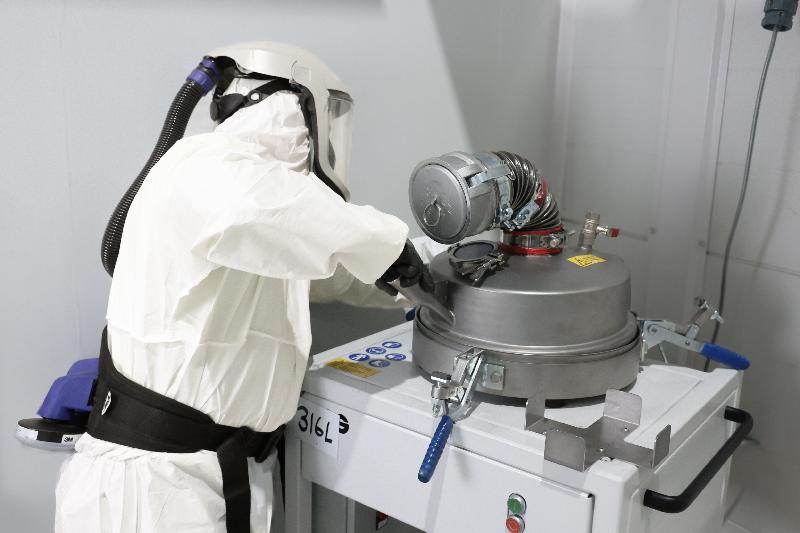
In metal printing, the powder bed fusion method recycles the material throughout the printing process. With high-quality equipment, this is done safely and without compromising printing quality.

In the additive manufacturing of metals by powder bed fusion, is powder recycling an essential part of the process. When printing components, the powder is spread to the entire printing plate. The desired parts are melted from the powder by laser layer by layer. The height of the components determines the volume of powder required in the process. In printing, much of the applied powder remains unused and is finally vacuumed around the pieces for recycling.

Recycling makes sense

From time to time, the use of virgin powder in printing becomes a requirement, and the mixing of powder batches is causing concerns. The use of virgin powder alone in printing is possible but does not make sense for the component. The material loss is then very high, and the price of the component increases too. More important is to monitor the use of powder batches and mixing ratios.

When the powder is melted layer by layer, its properties change slightly around the piece each time it is recycled. The powder particles melt together into a larger one and some of the finest powder disappears with the flow of shielding gas to the filters. Larger particles cannot enter from the sieve into the process, but the absence of small particles impairs the spreadability of the powder in the long run. For this reason, the powder must be renewed at certain intervals by mixing it with new powder.

There are differences in materials

Materials behave differently. The most difficult to recycle are reactive materials such as titanium and its alloys. These react with oxygen during the handling of the material as well as during the process, which affects the properties of the part. However, in tests of titanium used in medical applications, it has been found that although the oxygen as well as the nitrogen content in the powder increase, they are still within the limits of the fresh powder even after 30-35 uses.

When recycling materials, it is advisable to monitor the static strength values ​​to ensure quality, and it is easy to print the drawbars from time to time alongside other parts. Existing research data is also available and it can be seen that the normal recycling of the powder does not significantly affect the strength properties, be it aluminum, titanium, nickel alloys, or steel. Ti6Al4V material has even been shown to improve its mechanical properties during the first few recycling cycles. Thus, the printed parts can be used without any concerns according to the material values ​​given by the equipment manufacturers.

Critical items

Critical items, such as those related to personal safety, may end up requiring that all items are always made from unused powder and the same batch of powder. The aim is to achieve the same technical values. However, we consider this is not necessary. The monitoring of the powder becomes important. The manufacturer must be able to calculate the number of uses per batch and the age at which the powder is used. An accurate record must be kept of recycling. Even Airbus, which operates in such a demanding sector as the aircraft industry, accepts e.g. the computational method for the proportions of the different alloying elements. Random tests for strengths are, of course, performed, but by calculating the mixing ratios it is possible to ensure that the powders remain within the promised limits for certain properties.


For further information:

Markku Lindqvist, CTO, markku.lindqvist@delva.fi